
Precautions For Peel Strength Test Of 3PE Anti-Corrosion Coatings To DIN 30670
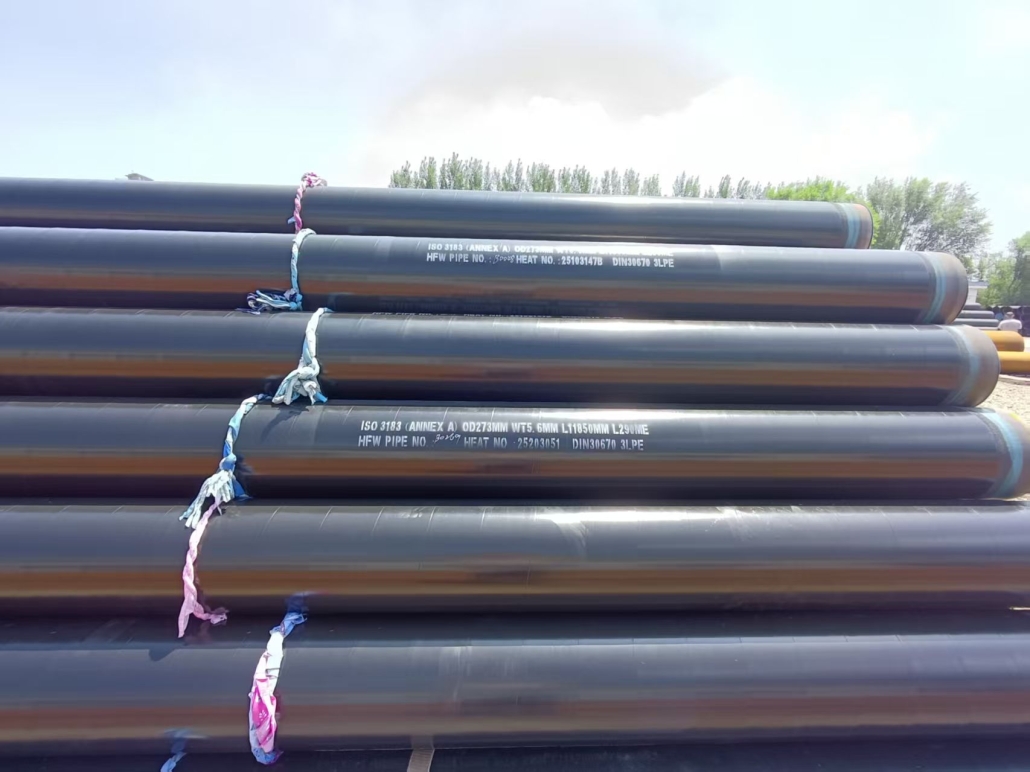
DIN 30670 is the core technical standard for polyethylene anti-corrosion coatings applied to buried steel pipelines for gas and water supply in Germany. The peel strength test for 3PE coatings under this standard focuses on verifying the adhesion between the coating and the substrate as well as interlayer adhesion. All test operations must strictly comply with the standard clauses to eliminate systematic errors and human interference.
Specimen Preparation and Conditioning (Basis for Compliance)
Sampling and Cutting Requirements: Specimens shall be taken from the flat straight sections of finished anti-corrosion pipes, at least 50 mm away from pipe ends, circumferential welds and defective areas. Specimens with coating blisters, pinholes or mechanical damage are strictly prohibited. Specimens shall be prepared by precision mechanical cutting to a standard width of 20 mm ± 0.5 mm, with burr-free and thermally uninjured cuts to prevent pre-delamination between layers caused by cutting stress. A pre-peeled tab of 25 ± 5 mm shall be prepared, only separating the target test interface (FBE/steel substrate, adhesive/FBE, PE/adhesive) without damaging the coating bulk or steel pipe base material.
Specimen Conditioning Specifications: For ambient temperature tests, specimens shall be conditioned in a standard environment of 23 °C ± 2 °C and 50% ± 5% relative humidity for at least 16 h. For elevated temperature peel tests, constant temperature insulation shall be performed at the standard specified temperatures (e.g., 50 °C, 80 °C) for no less than 45 min to ensure the coating reaches full thermal equilibrium; testing shall not commence until the target temperature is achieved.
Specimen Storage Restrictions: Prepared specimens shall be stored in a light-proof and constant-temperature environment. Contact with oil, solvents or direct high-temperature exposure is strictly prohibited to avoid irreversible degradation of coating adhesion properties.
Test Equipment and Parameter Control (Core for Accuracy)
Equipment Calibration and Precision: The tensile testing machine shall meet the Class 1 accuracy requirement of ISO 7500-1, with a legally calibrated force measurement system within the validity period. Special non-metallic anti-slip clamps shall be used with moderate clamping force to prevent crushing of the polyethylene topcoat or specimen slippage.
Constant Parameter Requirements: DIN 30670 specifies a 90° peel mode with a peel angle deviation ≤ ±2°, as angle offset directly leads to distorted data. The peel rate shall be strictly controlled at 100 mm/min ± 5 mm/min, maintaining a constant speed throughout the test without start-stop or speed variation. The data acquisition frequency shall be no less than 10 Hz to fully record the load-displacement curve.
Temperature Control Equipment Requirements: Thermostats for elevated temperature tests shall have a temperature control accuracy ≤ ±1 °C, free from local overheating or temperature fluctuations. Opening the thermostat for specimen adjustment during testing is prohibited to avoid sudden temperature changes affecting test results.
Test Operation and Failure Determination (Key for Validity)
Standard Clamping Operation: Specimens shall be clamped to ensure coaxial alignment of peel force, free from torsion or deflection, with a linear peel path. The first 50 mm and last 20 mm of the peel length are regarded as unstable stress sections; data from these zones shall be discarded, and only load data from the continuous and stable middle peel section shall be collected.
Failure Mode Determination: DIN 30670 defines interfacial adhesive failure as the valid failure mode. Test results shall be invalidated and retesting required if cohesive fracture of the coating, premature peeling caused by specimen cutting damage, clamp slippage or substrate deformation occurs during testing. The type of failure interface shall be accurately recorded, and peel performance of different interfaces shall be tested and documented in separate groups.
Parallel Specimen Control: Each test group shall contain no less than 5 parallel specimens. Outlier data with a dispersion coefficient > 15% shall be excluded, and the arithmetic mean of remaining valid specimens shall be taken as the final result.
Data Calculation and Record Traceability (Guarantee for Compliance)
Data Calculation Criteria: Peel strength is reported in N/mm, calculated as the load per unit width based on the actual specimen width. Conformity shall be determined against the temperature-specified limits in DIN 30670: the measured value of a single specimen shall not be lower than 80% of the standard lower limit, and the group average shall meet the standard index requirements.
Traceable Recording Requirements: The test report shall fully state the DIN 30670 standard revision, specimen number, equipment calibration number, ambient temperature and humidity, insulation duration, peel angle/speed, failure mode, raw load data and curves. Test specimens shall be retained until report issuance for re-inspection and traceability.
DIN 30670 is the core technical standard for polyethylene anti-corrosion coatings applied to buried steel pipelines for gas and water supply in Germany. The peel strength test for 3PE coatings under this standard focuses on verifying the adhesion between the coating and the substrate as well as interlayer adhesion. All test operations must strictly comply with the standard clauses to eliminate systematic errors and human interference.
Specimen Preparation and Conditioning (Basis for Compliance)
Sampling and Cutting Requirements: Specimens shall be taken from the flat straight sections of finished anti-corrosion pipes, at least 50 mm away from pipe ends, circumferential welds and defective areas. Specimens with coating blisters, pinholes or mechanical damage are strictly prohibited. Specimens shall be prepared by precision mechanical cutting to a standard width of 20 mm ± 0.5 mm, with burr-free and thermally uninjured cuts to prevent pre-delamination between layers caused by cutting stress. A pre-peeled tab of 25 ± 5 mm shall be prepared, only separating the target test interface (FBE/steel substrate, adhesive/FBE, PE/adhesive) without damaging the coating bulk or steel pipe base material.
Specimen Conditioning Specifications: For ambient temperature tests, specimens shall be conditioned in a standard environment of 23 °C ± 2 °C and 50% ± 5% relative humidity for at least 16 h. For elevated temperature peel tests, constant temperature insulation shall be performed at the standard specified temperatures (e.g., 50 °C, 80 °C) for no less than 45 min to ensure the coating reaches full thermal equilibrium; testing shall not commence until the target temperature is achieved.
Specimen Storage Restrictions: Prepared specimens shall be stored in a light-proof and constant-temperature environment. Contact with oil, solvents or direct high-temperature exposure is strictly prohibited to avoid irreversible degradation of coating adhesion properties.
Test Equipment and Parameter Control (Core for Accuracy)
Equipment Calibration and Precision: The tensile testing machine shall meet the Class 1 accuracy requirement of ISO 7500-1, with a legally calibrated force measurement system within the validity period. Special non-metallic anti-slip clamps shall be used with moderate clamping force to prevent crushing of the polyethylene topcoat or specimen slippage.
Constant Parameter Requirements: DIN 30670 specifies a 90° peel mode with a peel angle deviation ≤ ±2°, as angle offset directly leads to distorted data. The peel rate shall be strictly controlled at 100 mm/min ± 5 mm/min, maintaining a constant speed throughout the test without start-stop or speed variation. The data acquisition frequency shall be no less than 10 Hz to fully record the load-displacement curve.
Temperature Control Equipment Requirements: Thermostats for elevated temperature tests shall have a temperature control accuracy ≤ ±1 °C, free from local overheating or temperature fluctuations. Opening the thermostat for specimen adjustment during testing is prohibited to avoid sudden temperature changes affecting test results.
Test Operation and Failure Determination (Key for Validity)
Standard Clamping Operation: Specimens shall be clamped to ensure coaxial alignment of peel force, free from torsion or deflection, with a linear peel path. The first 50 mm and last 20 mm of the peel length are regarded as unstable stress sections; data from these zones shall be discarded, and only load data from the continuous and stable middle peel section shall be collected.
Failure Mode Determination: DIN 30670 defines interfacial adhesive failure as the valid failure mode. Test results shall be invalidated and retesting required if cohesive fracture of the coating, premature peeling caused by specimen cutting damage, clamp slippage or substrate deformation occurs during testing. The type of failure interface shall be accurately recorded, and peel performance of different interfaces shall be tested and documented in separate groups.
Parallel Specimen Control: Each test group shall contain no less than 5 parallel specimens. Outlier data with a dispersion coefficient > 15% shall be excluded, and the arithmetic mean of remaining valid specimens shall be taken as the final result.
Data Calculation and Record Traceability (Guarantee for Compliance)
Data Calculation Criteria: Peel strength is reported in N/mm, calculated as the load per unit width based on the actual specimen width. Conformity shall be determined against the temperature-specified limits in DIN 30670: the measured value of a single specimen shall not be lower than 80% of the standard lower limit, and the group average shall meet the standard index requirements.
Traceable Recording Requirements: The test report shall fully state the DIN 30670 standard revision, specimen number, equipment calibration number, ambient temperature and humidity, insulation duration, peel angle/speed, failure mode, raw load data and curves. Test specimens shall be retained until report issuance for re-inspection and traceability.
 Korean
  English
  Arabic
  Dutch
Dutch  French
  German
  Italian
  Spanish
댓글을 남겨주세요
토론에 참여하고 싶으신가요?자유롭게 기여해 주세요!