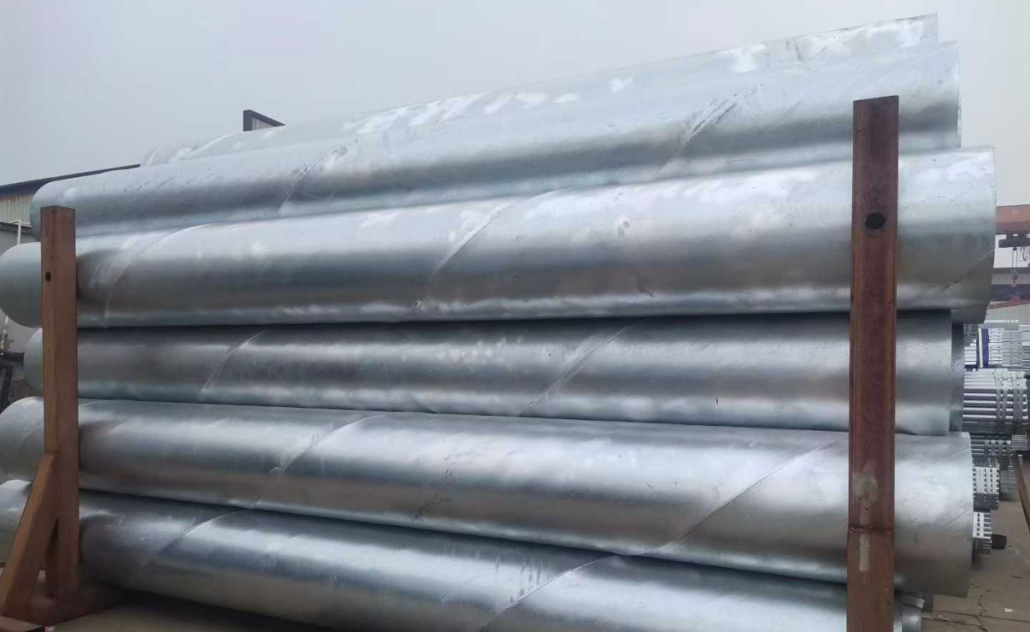
Degreasing the Surface of Galvanized Steel Pipes
Oil contamination on the surface of galvanized steel pipes mainly derives from antirust oil, drawing oil, cutting oil generated during rolling, cold drawing, storage and transportation, as well as oil-dust mixtures. The core principles of degreasing are no damage to the zinc coating, no residue, and compatibility with subsequent processing. A combined physical and chemical process shall be selected based on the severity of oil contamination and batch size. The following is the industrial-standard degreasing solution.
Physical degreasing is applicable for light oil contamination and on-site emergency treatment, serving as a basic pretreatment method. Manual wiping uses dust-free cloths or sponges dipped in clean water or neutral detergent to wipe the pipe surface section by section. It features simple operation and extremely low cost, and can remove floating oil, but is limited in cleaning inner walls and threaded dead corners, making it suitable for small batches of scattered pipe fittings. High-pressure water washing adopts normal-temperature or 40–50°C warm water with low-pressure spraying, with water pressure controlled at 5–10 MPa to avoid erosion of the zinc coating by high pressure. It can quickly remove surface dust and light oil films, with higher efficiency than manual wiping, and is suitable for outer surface pretreatment of bundled pipes. Adsorption degreasing uses oil-absorbent felts and non-woven fabrics to attach to the pipe surface and adsorb free oil on the surface. It involves no water or chemicals throughout the process, and is suitable for precision pipe fittings prohibited from contacting water, but only effective for floating oil and incapable of handling viscous oil. Hot-air drying and degreasing volatilizes light oil components through baking with 60–80°C hot air, and can reduce residues in combination with purging, mostly used for drying pretreatment after degreasing.
Chemical degreasing is the mainstream solution for medium and heavy oil contamination. Strong acids, strong alkalis and strong alkaline degreasers must be strictly avoided to prevent corrosion, whitening and peeling of the zinc coating. Cleaning with neutral degreaser is the preferred process: a water-based neutral degreaser with a pH value of 7–8 is mixed with water at a ratio of 5%–10%, and treated by immersion for 3–10 minutes or cyclic spraying at normal temperature to 50°C. It can completely decompose heavy oil contamination such as drawing oil and antirust oil. After degreasing, the pipes are fully rinsed with clean water without chemical residues. It is suitable for mass production on assembly lines, protects the zinc coating and meets environmental protection standards. Solvent degreasing uses environment-friendly hydrocarbon solvents and industrial gasoline to quickly dissolve oil contamination by wiping or short-time immersion, with fast drying and no water marks. It is suitable for small precision pipe fittings, but the solvents are flammable, so operation must be carried out in a ventilated and fireproof environment, and large-area immersion is prohibited.
Post-degreasing treatment is a critical step. Pipe fittings after rinsing shall be dried timely with hot air or naturally to avoid oxidation and whitening of the zinc coating caused by residual water marks. The use of strong acids such as hydrochloric acid and sulfuric acid, strong alkali cleaners such as high-concentration sodium hydroxide, and strong mechanical degreasing methods such as steel wire brushes, sand blasting and shot blasting is strictly prohibited to prevent damage to the zinc coating.
In actual production, physical wiping plus high-pressure washing is sufficient for light oil contamination. For medium and heavy oil contamination, the combined process of neutral degreaser spraying/immersion + clean water rinsing + hot-air drying is preferred. This solution achieves thorough degreasing, intact protection of the zinc coating and stable efficiency, making it the standard degreasing process before processing, coating and welding of galvanized steel pipes.
 French
  English
  Arabic
  Dutch
Dutch  German
  Italian
  Korean
  Spanish
Laisser un commentaire
Participez-vous à la discussion?N'hésitez pas à contribuer!