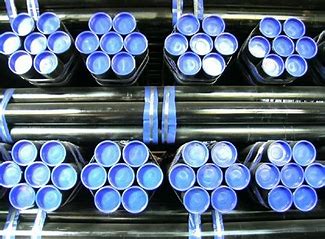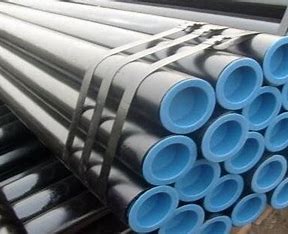
Temperatuur temperen en mechanische eigenschappen van pijpleidingen

Volgens API5L, GB/T9711.1 de prestatiesvereisten van de pijpleidingsstaalpijp, volgens de verschillende aanmakende temperatuur, kan het aanmaken in het volgende worden verdeeld:

1. Temperen bij lage temperatuur (150-250 graden)

De microstructuur die wordt verkregen door ontlaten bij lage temperatuur is getemperd martensiet. Het doel is om de dovende spanning en broosheid van het gedoofde staal op het uitgangspunt van het handhaven van hoge hardheid en hoge slijtageweerstand te verminderen, om het barsten of voorbarige schade tijdens gebruik te vermijden. Het wordt hoofdzakelijk gebruikt voor een verscheidenheid van hoge koolstof scherpe hulpmiddelen, die hulpmiddelen, API5L, GB/T9711.1-pijpleidingsstaalpijp, het rollen het dragen en het carbureren delen meten, is de hardheid van de humeur over het algemeen HRC58-64.

2. Gematigd temperen (250-500 graden)

De microstructuur die verkregen wordt door matig ontlaten is ontlaten troxiet. Het doel is om hoge vloeigrens, elasticiteitsgrens en hoge hardheid te verkrijgen. Daarom wordt het hoofdzakelijk gebruikt voor allerlei API5L, GB/T9711.1-pijpleidingsstaalpijp en hete het werk matrijzenbehandeling, is de aangemaakte hardheid over het algemeen HRC35-50.

3. Temperen op hoge temperatuur (500-650 graden)

De microstructuur verkregen door ontlaten op hoge temperatuur is ontlaten soxiet. Het is gebruikelijk om dovende en aanmakende thermische behandeling te combineren genoemd aanmakend behandeling, moet zijn doel sterkte, hardheid en plasticiteit verkrijgen, is de hardheid betere uitvoerige mechanische eigenschappen. Daarom wordt het wijd gebruikt in auto, API 5L, GB/T9711.1 de pijp van het pijpleidingsstaal, werktuigmachines en andere belangrijke structurele delen, zoals koppelstang, bout, toestel en schacht. De hardheid na het aanmaken is over het algemeen HB200-330.

Mechanische eigenschappen:
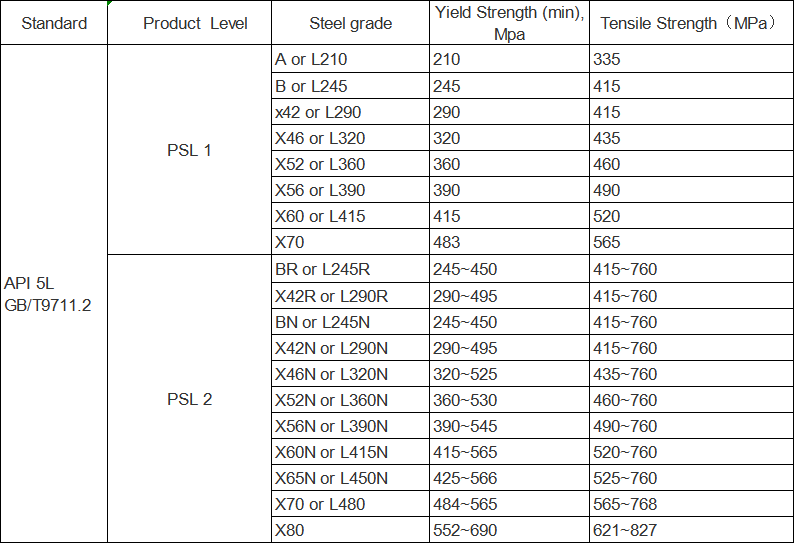
Het materiaal van de pijpleiding

Toepassing: Gebruikt voor gas-, water- en olietransport in de aardolie- en aardgasindustrie

API SPEC 5L-2011 (Pipeline Specification), ontwikkeld en gepubliceerd door het American Petroleum Institute, wordt wereldwijd gebruikt. Het belangrijkste materiaal van de buis is L245, L290, L360, L415, L480, GR.B, X42, X46, X56, X65, X70, X80, X100 en andere staalsoorten.

Lassen van roestvast stalen pijpen

1. Het is over het algemeen geschikt voor het lassen van dunne stalen buis onder de 6 mm, met de kenmerken van mooie en elegante las vormen en kleine lassen vervorming.
2. Het onderhoudsgas is argon met een zuiverheid van 99,99%. Wanneer de lasstroom 50-50A is, is het argon debiet 8-10L/min, en wanneer de stroom 50-250A is, is het argon debiet 2-5L/min.
3. De lengte van de wolfraamstaaf die uit het gasmondstuk steekt is 4-5 mm, 2-3 mm op de plaats van slechte maskering zoals hoeklassen, 5-6 mm op de plaats van diepe groeven, en het interval van het mondstuk naar de bewerking overschrijdt over het algemeen niet 5 mm.
4. Om het ontstaan van lasporiën te voorkomen, is het noodzakelijk om de lasdelen schoon te maken als er roest en olie aanwezig is.
5 Lassen booglengte, lassen ondiep staal, met 2-4 mm is de beste, en roestvrij staal lassen, met 3 mm is de beste, te lang onderhoud resultaten zijn niet goed.
6. Om te voorkomen dat de achterkant van de lasnaad van de bodem wordt geoxideerd, moet de achterkant ook gasonderhoud uitvoeren.
7. Om het lasbad goed met argon te onderhouden en het lassen te vergemakkelijken, moet op de lasplaats tussen de middellijn van de wolfraampool en het werkstuk een hoek van 80-85° worden gemaakt en moet de algemene hoek tussen de lasdraad en het werkstuk zo klein mogelijk zijn, in het algemeen 0°.
8. Winddicht en ventilatie. Kies op winderige plaatsen de methode om het net vast te houden en in de kamer moet de juiste ventilatiemethode worden gekozen.

Classificatie van gegalvaniseerde buizen

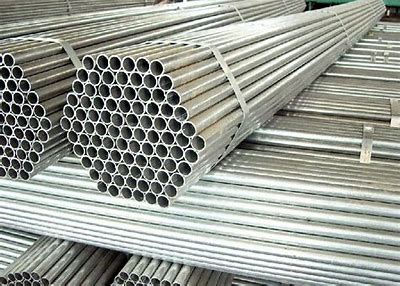
Gegalvaniseerde pijp, ook bekend als gegalvaniseerde stalen buis, is onderverdeeld in thermisch verzinkt en elektrisch verzinkt. Thermisch verzinken laag dik, uniforme coating, sterke hechting, lange levensduur. De kosten van galvaniseren zijn laag, het oppervlak is niet glad, de corrosieweerstand is slechter dan bij thermisch verzinken.
Gegalvaniseerde stalen buis: hete onderdompeling gegalvaniseerde stalen buis stalen buis substraat en gesmolten plateren oplossing samengestelde fysieke, chemische reactie, de vorming van een dichte zink ijzer legering laag corrosiebestendige structuur. De legeringslaag is geïntegreerd met de zuivere zinklaag en het substraat van de stalen buis. Daarom is de corrosieweerstand sterk.
Gegalvaniseerde stalen buis: De zinklaag van koudverzinkte stalen buis is een elektrische coating en de zinklaag is gescheiden van het stalen buissubstraat. De zinklaag is erg dun en de zinklaag zit gewoon vast aan het stalen buissubstraat, dat er gemakkelijk af kan vallen. Hierdoor is de corrosiebestendigheid slecht. In nieuwe huizen is het gebruik van koudverzinkte stalen buizen als waterleiding verboden.

Inleiding tot schepen staalplaat

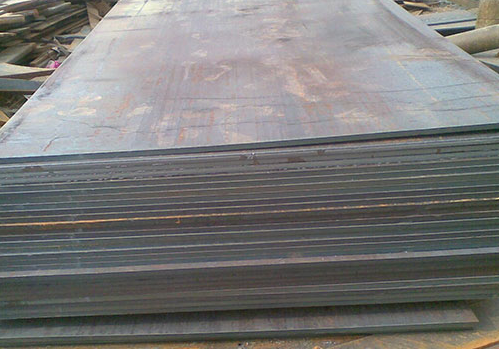
In fact, the vessels is a big category among many steel plates, which has very special composition and many excellent properties. At present, this kind of vessels plate is mainly used to make pressure vessels in the market. For different situations and different uses, the corresponding materials to be made are also different.

This kind of device has a relatively large number of brand names in the current market, and its application scope corresponding to different delivery states is also different. In the following small series, users will be specifically introduced about the vessels plate.

Introduction to the use of the vessels

vessels plate is now widely used in petroleum, chemical industry, power stations and boilers, etc. It is used to manufacture reactors, heat exchangers, separators, spherical tanks, oil and gas tanks, liquefied gas tanks and nuclear reactor pressure shells, etc. In addition, this material is also used to manufacture boiler drums, liquefied oil and gas cylinders, high-pressure water pipes of hydropower stations, spiral cases of water turbines and other equipment or components. Moreover, this material has a very broad market at home and abroad.

Introduction of delivery status of vessels

There are four main delivery states of plates, namely quenching, normalizing, annealing and tempering. Moreover, the main application scope of each delivery state is also different.

Main application scope of normalizing

Compared with low carbon steel, the hardness of vessels plate after normalizing is higher than that after annealing, and its toughness is relatively good.

Can be used with medium carbon steel.

Used for tool steel, carburized steel and bearing steel.

Used for steel castings, normalizing, it has a good refining effect on the microstructure of steel materials.

It is used for large forgings and nodular cast iron, which can improve its hardness, strength and wear resistance.

Characteristics of the plate after tempering

1. After tempering, the structural stability of the vessels plate can be improved, so that the size and performance of the workpiece can be kept in a very good state.

2. After tempering, for the product made of vessels plate, it can also eliminate the internal stress in the container plate, thus changing the service performance of the device.

3. The mechanical properties of the vessels plate can be well adjusted, so as to meet the requirements of application in various fields.

Plate is a kind of important steel plate used for manufacturing various boilers and their accessories, and it is also the most widely used and used special steel plate for pressure vessels in China at present.

Voorzorgsmaatregelen voor de aanleg van metalen pijpleidingen in de winter

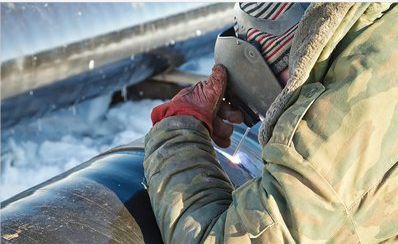
Metal pipeline construction points for attention in winter, the biggest characteristic of winter construction I think is that the temperature is relatively low, in the welding operation must pay attention to the temperature, the need to determine the temperature of the welding position before welding, in the case of lower than the process requirements of the temperature, the base metal must be preheated before welding. Attention should be paid to the thermal insulation problem after welding in winter. Attention should be paid to keep the materials dry in rain and snow. Measures should be taken during the welding construction in winter. If the temperature is above -5 degrees Celsius,  do some conventional drying and insulation. If the temperature is too low or the board is too thick, we need to preheat and pay attention to the insulation between layers.

Winter construction main technical measures

1. Pipe welding should be preheated in strict accordance with the requirements, and the pipe should be put into the closed workshop for heating in advance.

2. when the ambient temperature is below 5℃, it is not suitable for hydraulic test; The water of the pipeline that has been tested by hydraulic pressure should be drained out of the pipe in time and the pipe mouth should be temporarily blocked.

3. should try to avoid the pipeline pressure test in winter, if it must be in winter pressure test, to minimize the water filled pipeline exposure to the natural environment time, in line with the requirements of the specification under the premise, the test time should be as short as possible, after the test, to drain the water in the pipeline in time and maximize the blow dry.

4.The amount of prefabrication should be increased as much as possible to reduce the welding workload on site.

5. The wind speed during welding shall not exceed the following provisions; otherwise, windproof measures shall be taken:

A manual arc welding is 8m/s;

B hydrogen arc welding, carbon dioxide gas welding 2m/s

6.The relative humidity of the environment within 1m welding arc shall not be greater than 90%.

7. the welding environment temperature should be able to ensure that the welding parts required sufficient temperature and welder skills will not be affected.

8. Welding process requirements:

A When the ambient temperature is below 0℃, welding joints without preheating requirements, except austenitic stainless steel, should be preheated to more than 15℃ within 100mm of the initial welding site.

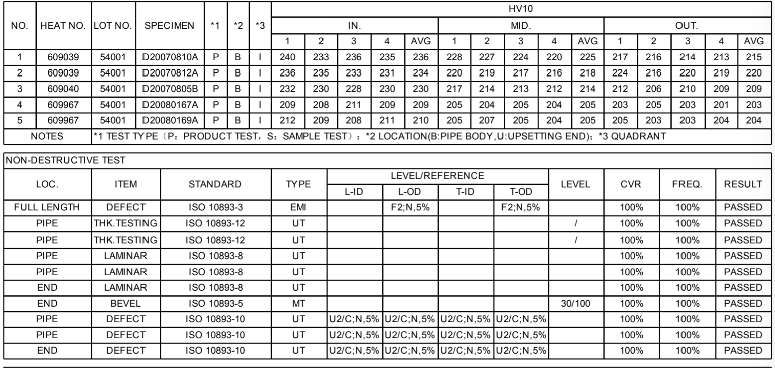
5 Niet-destructieve testmethoden voor staal

Het niet-destructief testen van staal bestaat voornamelijk uit stralenproeven, ultrasoonproeven, magnetische deeltjesproeven, penetratietesten en wervelstroomproeven.

 1. Radiografische detectie (RT)
Röntgentesten verwijst naar de niet-destructieve testmethode die gebruik maakt van röntgen- of gammastralen om het monster te penetreren en film gebruikt als de apparatuur voor het opnemen van informatie. Deze methode is de meest basale en meest gebruikte niet-destructieve testmethode.

2. Ultrasone detectie (UT)
Ultrasoon testen is geschikt voor het niet-destructief testen van metalen, niet-metalen en composietmaterialen. Het kan de interne gebreken van het monster binnen een breed diktebereik detecteren. Voor metaalmaterialen, kan de dikte van 1 ~ 2mm dunne muurpijp en plaat ontdekken, kan ook verscheidene meters lange staalsmeedstukken ontdekken; Bovendien is de tekortplaats nauwkeuriger en het opsporingstarief van gebiedsdefecten is hoger. De hoge gevoeligheid, kan de interne grootte van het specimen ontdekken is kleine tekorten; En de opsporingskosten zijn laag, is de snelheid snel, is het materiaal licht, onschadelijk aan het menselijke lichaam en het milieu, is het gebiedsgebruik geschikter.

3. Detectie van magnetische deeltjes (MT)
Principe van magnetische deeltjesdetectie is gemagnetiseerd ferromagnetisch materiaal en werkstuk, maar vanwege de discontinuïteit, de magnetische veldlijnen op het oppervlak van het werkstukoppervlak en in de buurt van lokale vervorming en een lekkage magnetisch veld wordt gegenereerd, adsorptie op het oppervlak van het magnetische poeder en magnetische markeringen zichtbare vorm in het juiste licht visueel, waaruit de locatie, vorm en grootte van discontinuïteit.

4. Penetratietesten (PT)
Het principe van penetratie detectie is dat na het oppervlak van het deel is bedekt met permeant met fluorescerende kleurstof of gekleurde kleurstof, onder invloed van capillaire werking, na een bepaalde tijd, de doordringbare vloeistof kan doordringen in het oppervlak opening gebreken; Na het verwijderen van het oppervlak overtollige penetrant, geschilderd op het oppervlak van de onderdelen imaging agent opnieuw, ook onder de werking van capillaire, imaging agent zal aantrekken gebreken in penetranten, doordringende vloeistof terug te stromen in de imaging agent, in een bepaald licht (uv licht of wit licht), defect penetrant sporen zijn werkelijkheid, (geel-groene fluorescentie of helder rood), dus de morfologie en distributie van gebreken worden gedetecteerd.

5. Wervelstroomtesten (ET)
Wervelstroomtesten plaatsen een spoel met wisselstroom op een metalen plaat of buiten een metalen buis die getest wordt. Op dat moment wordt er een wisselend magnetisch veld opgewekt in en rond de spoel, wat resulteert in een wervelachtige geïnduceerde wisselstroom in het monster, wervelstroom genaamd. De verdeling en grootte van de wervelstroom zijn niet alleen gerelateerd aan de vorm en grootte van de spoel en de grootte en frequentie van de wisselstroom, maar zijn ook afhankelijk van de geleidbaarheid, permeabiliteit, vorm en grootte van het proefstuk, de afstand tot de spoel en of er scheuren in het oppervlak zitten.

API5L X52N X56Q PSL2 OD24″ Naadloze pijpleiding

onze fabriek heeft Φ720 het rollen kan grote grootte naadloze pijpen direct produceren. zoals API5L X65QS PSL2 OD610*12.7mm door warmgewalste het produceren Lengte 12m

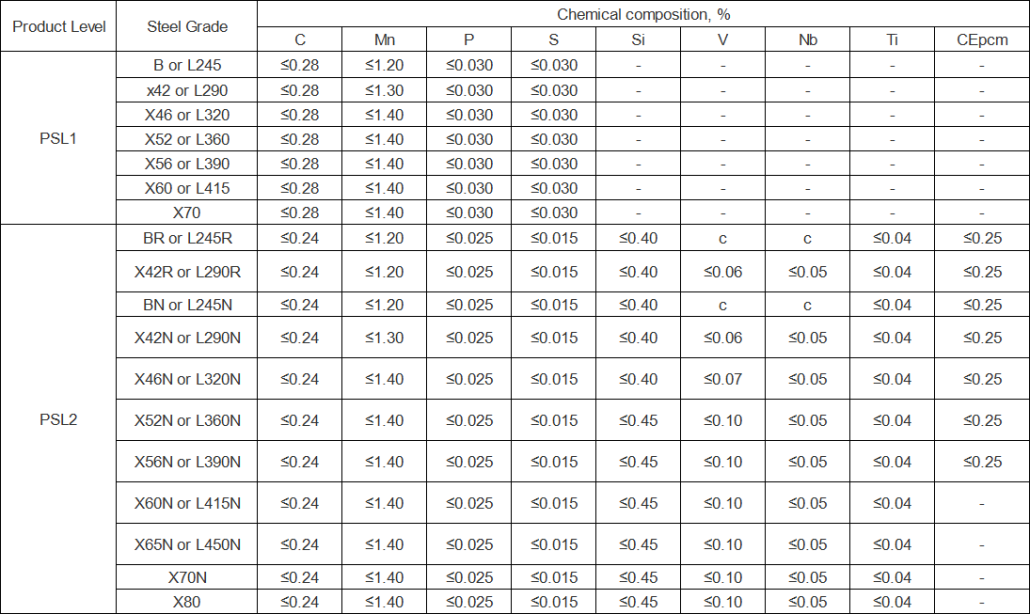
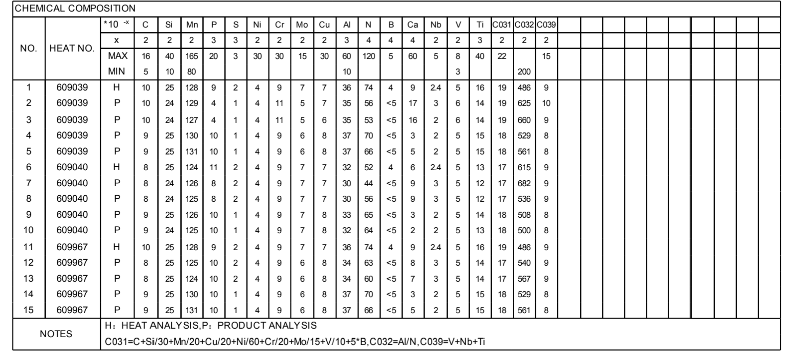
API5L X65QS PSL2 chemische samenstelling:

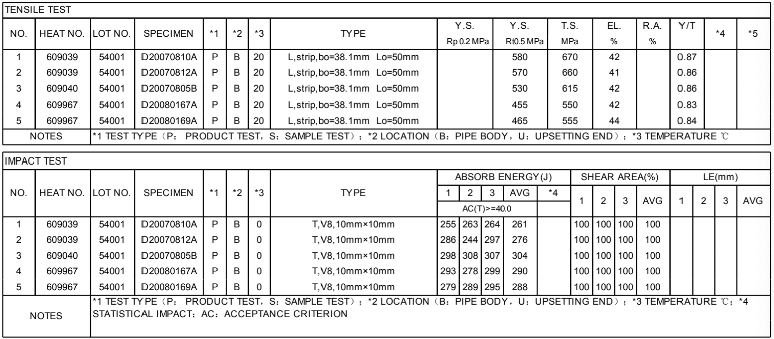
API5L X65QS PSL2 Mechanische Eigenschappen

www.wldsteel.com

steel@worldironsteel.com

Koolstofstaal voor waterstofsulfidecorrosietoepassingen

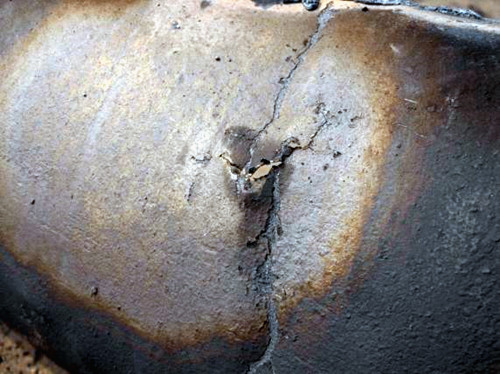
Waterstofsulfide H₂S is een anorganische verbinding die kleurloos, brandbaar, oplosbaar in water zuur gas, waterstofsulfide corrosie verwijst naar de olie-en gaspijpleiding met een bepaalde concentratie van waterstofsulfide (H2S) en water corrosie. H₂S lost op in water en wordt zuur, wat leidt tot elektrochemische corrosie en plaatselijke pitting en perforatie van pijpleidingen. De waterstofatomen die tijdens het corrosieproces ontstaan, worden geabsorbeerd door het staal en verrijkt in de metallurgische defecten van de pijp, wat kan leiden tot verbrossing van het staal en het ontstaan van scheuren, wat scheurvorming tot gevolg heeft. De pijpleiding en apparatuur van zure olie- en gasvelden die H₂S bevatten, zijn vele malen plotseling gescheurd of bros gebroken, er zijn scheuren ontstaan in laszones en andere ongelukken, die voornamelijk worden veroorzaakt door waterstofgeïnduceerd scheuren (HIC) en sulfide spanningsscheuren (SSC).

De factoren die de corrosie van H₂S beïnvloeden zijn onder andere de waterstofsulfideconcentratie, PH-waarde, temperatuur, stroomsnelheid, kooldioxide- en chloride-ionconcentratie (C1-). Er is sprake van een nat spanningscorrosiemilieu van waterstofsulfide als aan de volgende voorwaarden wordt voldaan:

  • De mediumtemperatuur is niet hoger dan 60+2P ℃, P is de overdruk van het medium (MPa);
  • B gedeeltelijke druk van waterstofsulfide is niet minder dan 0,35mpa;
  • Het medium bevat water of de mediumtemperatuur is lager dan de dauwpunttemperatuur van water;
  • Medium met PH lager dan 9 of cyanide.

De resultaten tonen aan dat voor het gelegeerde staal wanneer de sterkte of hardheid van het staal hetzelfde is, de microstructuur van uniforme verdeling van kleine bolvormige carbiden kan worden verkregen door ontlaten bij hoge temperatuur na afschrikken, en de weerstand tegen H2S corrosie is beter dan die na ontlaten. De vorm van insluitsels is ook belangrijk, vooral de vorm van MnS, omdat MnS gevoelig zijn voor plastische vervorming bij hoge temperaturen en de plaat MnS gevormd door warmwalsen niet kan worden veranderd tijdens de daaropvolgende warmtebehandeling.

De elementen Mn, Cr en Ni worden toegevoegd aan de koolstofstaal om de hardbaarheid te verbeteren, vooral Ni. Algemeen wordt aangenomen dat het nikkelelement gunstig is voor de taaiheid van gelegeerd staal, maar de overpotentiaal van de waterstofevolutiereactie van nikkelstaal is laag, het waterstofion is gemakkelijk te ontladen en te verminderen om de waterstofneerslag te versnellen, zodat de weerstand van nikkelstaal tegen sulfide spanningscorrosie slecht is. In het algemeen moeten koolstofstaal en gelegeerd staal minder dan 1% of geen nikkel bevatten. Elementen zoals Mo, V, Nb, etc. die stabiele carbiden vormen in staal.

ISO 15156-2, ISO 15156-3 of NACE MR0175-2003 hebben de omgevingscondities beperkt om het optreden van spanningscorrosie te voorkomen. Als niet aan deze voorwaarden wordt voldaan, moeten HIC- en SSC-tests worden uitgevoerd en moet aan andere relevante normen worden voldaan. Het American Corrosion Institute (NACE) MR-01-95 stelt dat ter voorkoming van sulfide spanningscorrosie (SSCC) gewoon staal (nikkelgehalte lager dan 1%) met een hardheid lager dan Rockwell HRC22 of gehard chroom-molybdeenstaal met een nikkelgehalte lager dan HRC 26 moet worden gebruikt.

Daarnaast zijn er nog andere beperkingen:

  • Onzuiverheden in staal: zwavel ≤ 0,002%, P≤0,008%, O≤ 0,002%.
  • De hardheid is niet meer dan 22HRC, de vloeigrens is minder dan 355MP, de treksterkte is minder dan 630MPa
  • Het koolstofgehalte van staal moet zoveel mogelijk worden verlaagd om te voldoen aan de mechanische eigenschappen van staalplaat. Voor laag koolstofstaal en koolstof-mangaanstaal: CE≤0,43, CE=C+Mn/6; Voor laaggelegeerd staal: CE≤045 CE=C+Mn/6+(Cr+Mo+V)/5+(Ni+Cu)/15

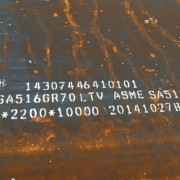
Staalplaat: SA387 Gr11(HlC), SA387 Gr12(HlC), SA387 Gr22(HlC), SA516 Gr65(HlC), SA516 Gr70(HlC);

Stalen pijp: API 5CT H40, J55, L55, C75 (1,2,3), L80 (type 1), N80 (type Q/T), C95 (type Q/T), P105, P110 Q/T); API 5L graad A, graad B, X42, X46, X52; ASTM A53, A106(A, B, C)

De beschikbare koolstofstaalpijp en plaat voor H₂S-toepassing

Lassen van ultra-superkritisch ketelmateriaal

Heat-resistant steel refers to the steel that works at high temperature and has excellent thermal strength and thermal stability. Thermal strength refers to the ability to resist creep and fracture at high temperature, and thermal stability refers to the ability to resist oxidation and corrosion of gaseous media at high temperature. People usually refer to the heat-resistant steel with thermal strength as heat-resistant steel and heat-resistant steel with thermal stability as heat-stable steel. Heat-resistant steels are mainly used in power and energy engineering, such as in the manufacture of oil refining equipment, boilers, nuclear vessels, steam turbines, synthetic chemical vessels, aerospace equipment and other high-temperature processing equipment. It should be noted that many stainless steels (309, 310H) also have heat resistance and are sometimes referred to as “heat resistant stainless steel”.

The welded joints of heat resistant steel shall have substantially the same high temperature oxidation resistance as the base metal. The alloy composition and content of weld metal should be basically consistent with the base metal, such as Cr, Mo, W and other major elements, while impurities such as P and S should be controlled at a low level as far as possible to reduce the tendency of hot crack. In order to improve the weldability, the C content of the welding material can be slightly lower than that of the base metal to ensure the high temperature performance. The strength of the weld metal shall be similar to that of the base metal to be welded. Heat-resistant steel welded joints shall not only have short-term strength at room temperature and high temperature basically equal to that of the base metal, but also, more importantly, have high temperature creep properties similar to that of the base metal. The performance requirements of new heat-resistant steel joints for ultra-supercritical boilers are shown in the following table.

RangenT.S σb  MPaY.Sσs  MPaElongation δ%AkvJAllowable stress at operating temperature,MPaHardheid, HB
P12263053017%3164 (620℃)225~270
P9263053017%3170(620℃)
HR3C6553069(650℃)
Super304H5903591(620℃)78(650℃)225~270

Although most of heat resistant steel welding structure is working under high temperature, but the final inspection for pressure vessels and piping requirements, usually at room temperature to 1.5 times the working pressure experiment hydraulic or pneumatic pressure test, the operation of pressure equipment or maintenance have to undergo the cold start process, so the heat resistant steel welding joint is also should have certain resistance to brittle fracture. For martensite and austenite heat resistant steels, the content of δ Ferrite in the deposited metal should be strictly controlled to ensure the creep property of the welded joints during the long time running at high temperature.

P92/T92, P122/T122 martensitic steel welding

Both P92 and P122 are martensitic steels, which have cold cracking tendency and hot cracking tendency during welding. In order to prevent cold cracks in welding, it is necessary to preheat before welding. The preheat temperature is not less than 150℃ for TIG welding and not less than 200℃ for electrode arc welding and submerged arc welding. In order to prevent hot crack and coarse grain, the welding line energy should be strictly controlled during the welding process, the interlayer temperature should be less than 300℃, and the tungsten electrode argon arc welding with small welding heat input is preferred. Multilayer and multi-pass welding should be paid attention to when welding electrode arc welding. The welding pass thickness should not be greater than the electrode diameter. The welding pass width should not be more than 3 times the electrode diameter and it is recommended that the electrode diameter should not be more than 4mm.For the workpiece with large wall thickness, submerged arc welding can be used for welding, but fine wire submerged arc welding should be used, and the diameter of the welding wire should be less than 3mm. When welding T122 and T92 small diameter tubes, the back side should be filled with argon during the whole welding process. For large-diameter thick-walled pipes, argon gas protection is required on the back of the first three layers of welds at the root. After weld welding, use asbestos insulation and slow cooling and stay between 100 ~ 150℃ for at least 1 ~ 2 hours, until the metallography is completely transformed into martensite, then can carry out post-weld heat treatment. For the wall thickness of the workpiece is greater than 40mm, after welding with asbestos insulation slow cooling, 100 ~ 150℃ at least stay 1 ~ 2 hours, if not immediately heat treatment, should be heated to 200 ~ 300℃ insulation 2 hours and then slow cooling to room temperature.

SUPER 304H, SA-213 TP310HCBN Austenitic steel welding

Austenitic steel has good weldability and no cold cracking tendency, so it does not need preheating. However, austenitic steel has hot cracking tendency during welding, so attention should be paid to the control of welding heat input and interlayer temperature. In the welding process, the welding method of welding line energy is smaller, such as manual TIG, automatic cold wire TIG welding or hot wire TIG welding. Generally, the interlayer temperature should be controlled not more than 150℃. For automatic cold wire TIG welding or hot wire TIG welding, the continuous welding process requires interlayer water cooling of the welded weld. In order to prevent intergranular corrosion, the chloride ion content in the cooling water should be controlled. In order to prevent the oxidation of alloying elements in the high temperature zone, the back surface should be filled with argon during the whole welding process. In order to ensure good fusion on both sides of groove, groove Angle of austenitic steel should be larger than that of general ferrite steel. For dissimilar steel welding with ferrite materials, ernicR-3 or EnICRFE-2 welding wire or electrode is recommended. When dissimilar steel is welded (with ferrite steel) and used at high temperatures, the expansion coefficient of both materials must be taken into account.